- Your cart is empty
- Continue Shopping


Anabolic SteroidsAnabolic Steroids OnlineSteroids Dubai
RAD 150 vs RAD 140: Which One Should You Choose in 2026?
-
By steroidsdubai
- Posted on
- 0 comments
RAD 150 vs RAD 140
If you’re looking to build muscle faster, you’ve probably heard about RAD 140 and RAD 150. These two compounds are making waves in the fitness world. But here’s the thing, they’re not the same. RAD 150 is actually the newer, modified version of RAD 140. Think of it as RAD 140’s upgraded cousin. Both promise muscle gains, but they work differently in your body. The real question is: which one fits your goals better? In this guide, we’ll break down everything you need to know. No confusing terms. No fluff. Just straight facts to help you make the right choice.
RAD 140 and RAD 150
RAD 140 goes by another name, Testolone. It’s been around longer and has more research behind it. Your body uses it to target muscle and bone tissue without hitting other areas as hard.
RAD 150 is RAD 140 with an added benzoate ester. This small chemical change makes a big difference. The ester makes RAD 150 last longer in your system. It also changes how your body absorbs it.
Both work by attaching to receptors in your muscles. This tells your body to grow more muscle tissue. But they’re not approved for human use yet. They’re only sold for research purposes.
Quick Comparison Table Between RAD 150 vs RAD 140
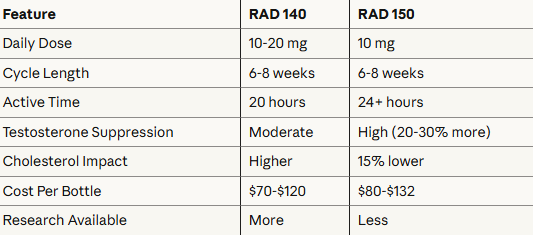
3 Major Differences Between RAD 140 and RAD 150
How Long Each One Works?
RAD 140 has a shorter active time in your body. You feel it working faster, but it also leaves your system quicker.
RAD 150 has increased half-life, stability, and bioavailability compared to RAD 140. This means it stays in your blood longer. You might notice steadier energy levels throughout the day.
Impact on Your Body
RAD 150 shows about 15% less impact on cholesterol levels and liver enzymes than RAD 140. Your heart and liver might thank you for this.
But there’s a catch. RAD 150 causes more testosterone suppression – roughly 20-30% more than RAD 140. This means your natural hormone production takes a bigger hit.
Dosage and Cost
Most people take RAD 150 at 10 mg daily for 8 weeks, while RAD 140 is typically used at 15 mg daily for the same period. You need less RAD 150 to get similar results.
RAD 150 costs more per bottle. But since you use a lower dose, the difference might balance out.
Why People Choose RAD 140?
RAD 140 builds muscle. That’s what it does best. Users report gaining lean mass without the bloating you get from other compounds.
Your strength goes up noticeably. You’ll likely add weight to your lifts within the first few weeks. Recovery between workouts improves too.
Fat loss is another benefit. Your body starts burning more calories even at rest. This helps you get leaner while building muscle.
Even at low doses, suppression occurs with RAD 140. Your body’s natural testosterone production drops during use.
What Results to Expect?
Most people see changes by week 2, with the best progress happening between week 4 and week 8. Here’s a realistic timeline:
- Week 1-2: Better pumps in the gym, slight strength increase.
- Week 3-4: Noticeable muscle fullness, 5-10% strength gains.
- Week 5-6: Clear visual changes, better muscle definition.
- Week 7-8: Peak results, 5-8 lbs lean mass gain possible.
Why RAD 150 Might Be Better?
RAD 150 brings similar muscle-building effects. But there are signs that RAD 150 interacts differently with receptors, possibly creating a better balance between muscle growth and other functions.
The longer-lasting nature means more stable blood levels. You won’t experience as many ups and downs during the day. This can mean steadier energy and mood.
Some users report less severe side effects on their cholesterol. But remember – it hits testosterone production harder than RAD 140.
RAD 150 Advantages
The benzoate ester gives RAD 150 three main benefits:
- Longer half-life means fewer blood level spikes.
- Better stability in your system.
- Improved absorption rates.
Real Side Effects of RAD 140 and RAD 150
Both compounds come with risks. Let’s be real about this.
There have been reports of heart attack and liver injury after use with RAD 140. These are serious concerns you can’t ignore.
Common side effects include headaches and trouble sleeping. Some people feel more irritable or notice mood swings. Blood pressure can increase by 20-30 points within a few weeks of starting use.
Water retention happens with both. You might look puffier than usual. Muscle definition can decrease temporarily.
Both suppress your natural hormone production. This means you’ll need proper recovery support after stopping use.
Side Effect Comparison
RAD 140 side effects:
- Testosterone suppression (moderate).
- Higher impact on cholesterol.
- Liver stress (documented cases).
- Blood pressure increase.
RAD 150 side effects:
- Testosterone suppression (20-30% higher).
- Lower cholesterol impact (15% less).
- Similar liver concerns
Blood pressure increase.
How to Use RAD 140 and RAD 150 In Right Way?
Users typically run cycles of 6-8 weeks. Going longer increases side effect risks without adding much benefit.
Take them once daily. Pick morning or evening and stick with it. This keeps levels steady in your blood.
Never skip post-cycle therapy (PCT). PCT is more important with RAD 150 due to stronger testosterone suppression. Your body needs help restarting natural production.
Get blood work done before and after. This tracks your hormone levels and liver health. It’s the only way to know what’s really happening inside.
Don’t exceed 8 weeks per cycle. Give your body at least 8 weeks off between cycles. This lets everything reset properly.
Beginner Protocol
If you’re new to either compound:
Start with 8 to 10 mg per day and increase gradually
Run shorter cycles (4-6 weeks max)
Get baseline blood work first
Have PCT ready before starting
Monitor blood pressure weekly
PCT Requirements
For RAD 140:
- Standard PCT (Nolvadex or Clomid).
- 4 weeks minimum.
- Start immediately after last dose.
For RAD 150:
- Stronger PCT protocol needed.
- Consider 6 weeks instead of 4.
- May need higher doses of PCT compounds.
- Blood work at week 4 of PCT.
So Which One Should You Pick?
There’s no universal winner here. It depends on what matters most to you.
- Choose RAD 140 if you want more research backing it up. It’s been studied longer. The effects are more predictable. It’s also easier on your natural testosterone.
- Go with RAD 150 if you want potentially less impact on cholesterol and liver markers. The longer half-life might suit your schedule better. But be prepared for stronger PCT needs.
Both require serious commitment to doing things right. Blood work isn’t optional. Neither is PCT. If you’re not ready for the full protocol, neither option is smart.
Decision Framework
Pick RAD 140 if you:
- Want more predictable results.
- Prefer easier PCT recovery.
- Value research-backed options.
- Are concerned about testosterone suppression.
Pick RAD 150 if you:
- Want steadier blood levels.
- Have cholesterol concerns.
- Don’t mind stronger PCT needs.
- Want longer-lasting effects.
What You Must Know Before Starting?
Neither RAD 140 nor RAD 150 is approved for human use. Both are banned by the World Anti-Doping Agency and the National Collegiate Athletic Association.
They’re sold only for research purposes. Using them comes with legal and health risks you need to understand fully.
Consider safer alternatives first. Natural supplements, proper training, and good nutrition build muscle too. They just take longer – but with zero hormonal disruption.
Conclusion
RAD 150 and RAD 140 both deliver muscle-building results. RAD 150 offers some improvements over RAD 140, especially in how long it lasts and its impact on cholesterol. But it suppresses testosterone more aggressively. RAD 140 has more research and causes less hormonal disruption. Your choice depends on your priorities and how you respond to each compound. Whatever you choose, proper cycling, blood monitoring, and PCT aren’t optional – they’re essential for protecting your health.
FAQs
Q: Can I stack RAD 140 with RAD 150?
No. Never stack these together. They work similarly and combining them dramatically increases suppression and side effect risks.
Q: Which one is better for cutting?
Both work for cutting. RAD 140 might be slightly better due to less water retention and predictable effects.
Q: Do I need PCT for both?
Yes, absolutely. Both suppress testosterone. RAD 150 needs stronger PCT due to higher suppression levels.
Q: Can women use these?
Some women use lower doses (5-10 mg), but the suppression risks are the same. Extra caution needed.
Q: What’s better for beginners?
RAD 140. More research exists, effects are more predictable, and PCT is less demanding.
